

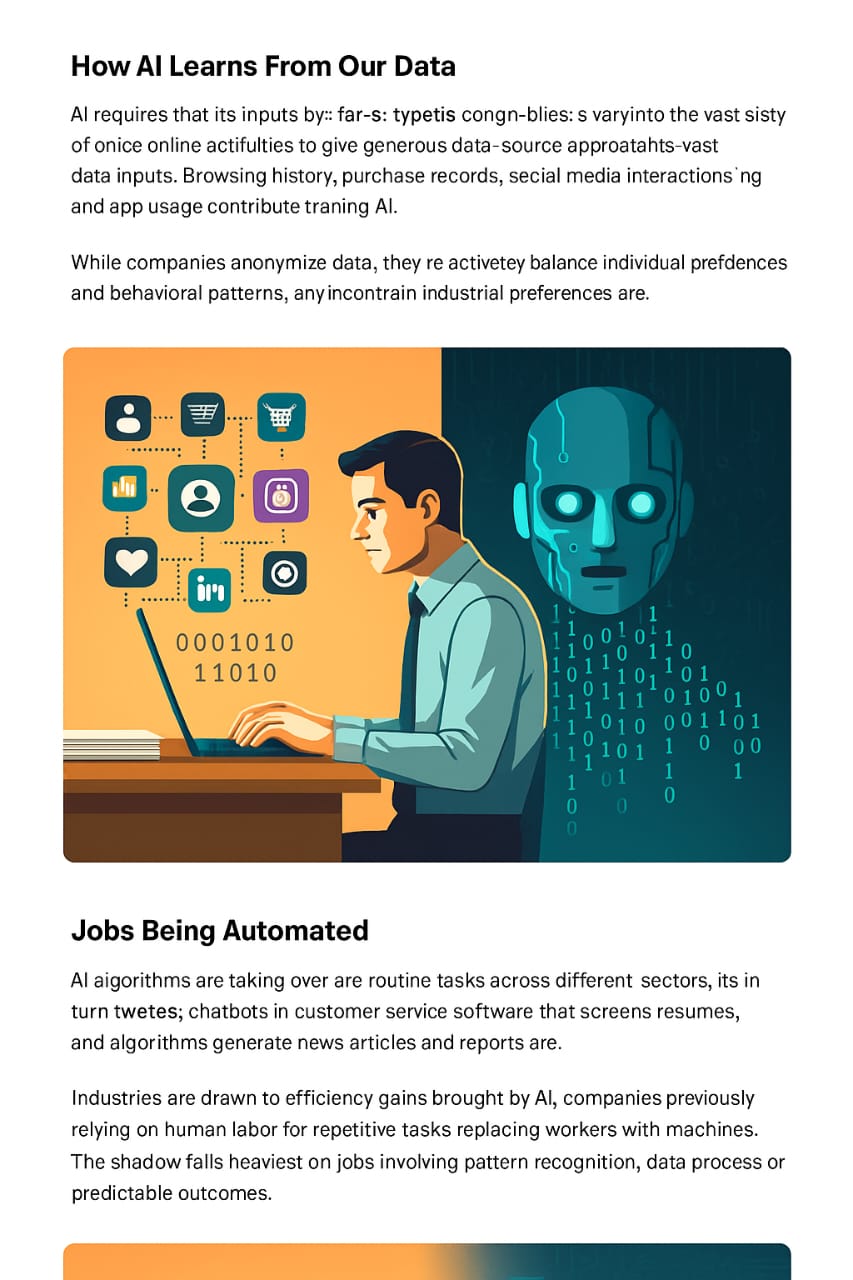
Artificial Intelligence is no longer a futuristic concept—it’s already here, working quietly behind the scenes of our lives. More unsettling is how it’s trained: with your personal data. As AI becomes more capable, it’s not just learning how you think and act—it’s learning how to replace your job.
How AI Learns From Your Data
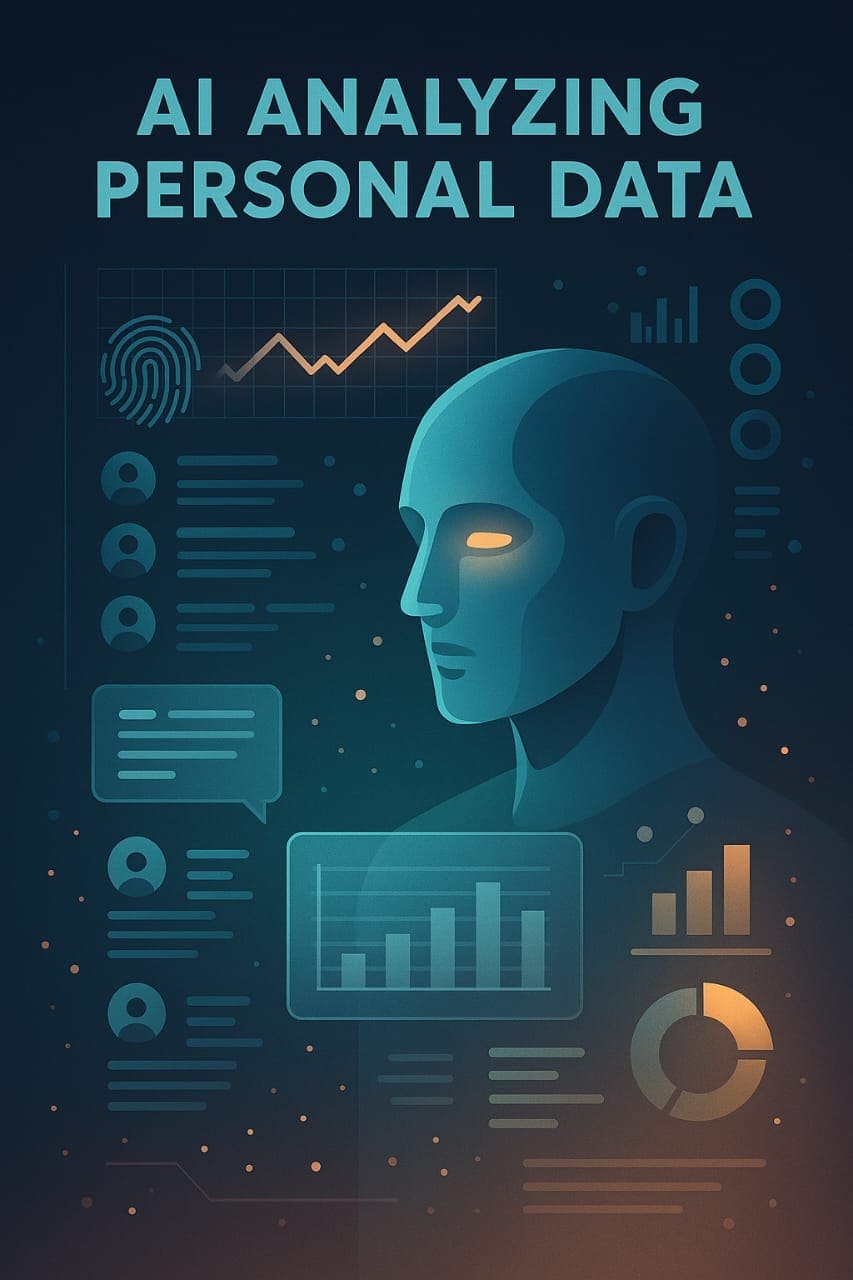
AI systems need vast amounts of data to learn and make decisions. This data is often collected from:
- Social media interactions
- Online purchases
- Browsing habits
- Voice assistants
- Mobile location tracking
While companies often claim to anonymize data, behavioral patterns remain. Over time, these patterns shape how AI systems function—making them smarter, faster, and increasingly independent from human labor.
Jobs Being Automated
AI has moved from supporting roles to taking over full tasks across industries:
- Customer Support: Chatbots can now handle thousands of tickets a day.
- Content Creation: Automated systems generate articles, product descriptions, and social posts.
- Graphic Design: AI tools create logos, social media banners, and more.
- Finance: Algorithms analyze markets and detect fraud.
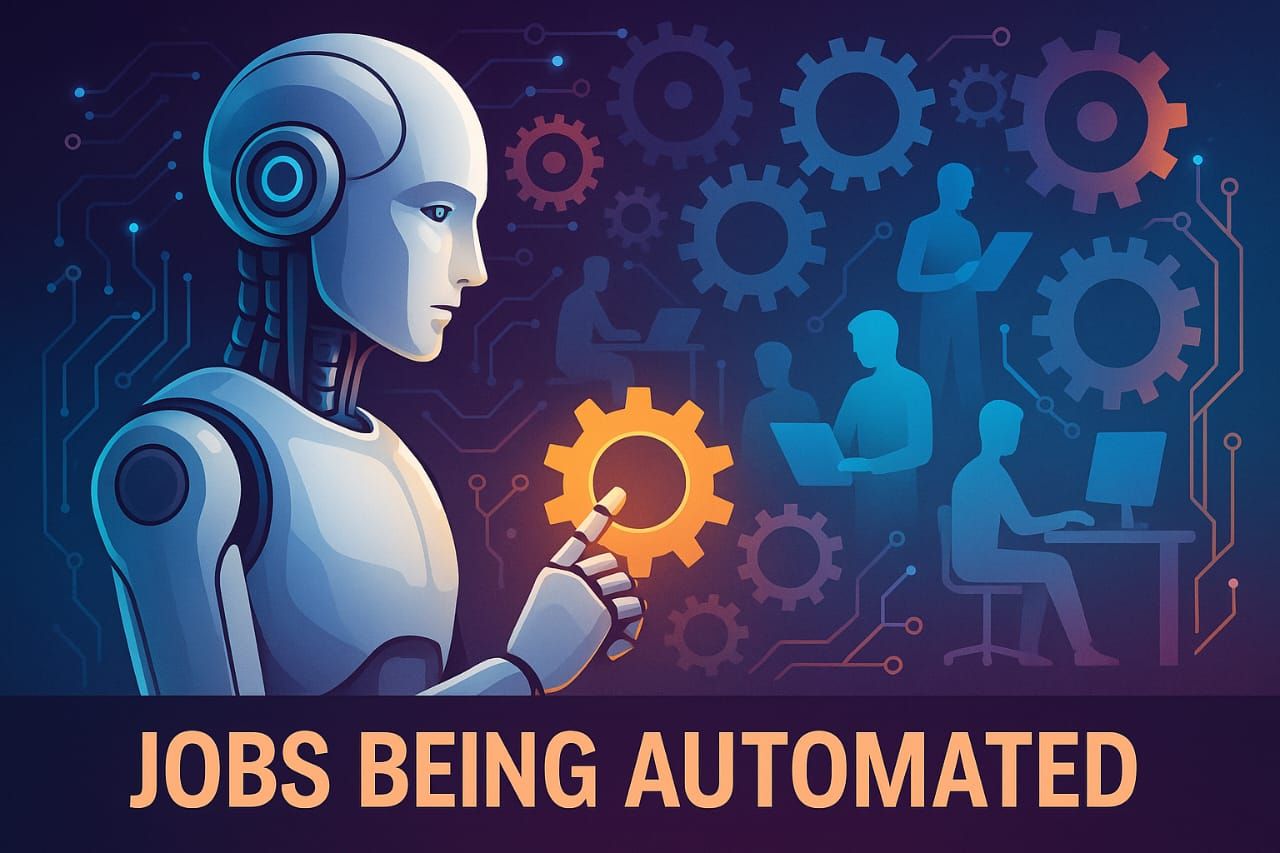
The hardest hit? Jobs involving routine tasks, pattern recognition, and predictable outcomes.
The Ethical Trade-Off
You provide the data. That data trains the AI. The AI replaces your job. And the profits? They go to corporations that own the infrastructure.
This cycle isn’t inherently evil—but it’s dangerously imbalanced. Without proper regulation, the benefits of AI will remain centralized, leaving workers and creators behind.
What Can You Do?
- Be mindful of the data you share.
- Support transparency in AI development.
- Focus on learning creative and strategic skills.
- Use AI as a partner—not a replacement.
Conclusion
AI is powerful, but it’s still a tool. The question is: who controls it, and at what cost?
We are feeding the machine—and in many cases, training it to make us obsolete. It’s time to wake up and reclaim agency over our data, our skills, and our future.
What do you think? Share your thoughts in the comments or forward this article to someone who needs to read it.

Thank you for your comment! Please keep it respectful and relevant